On this page
- Quick Answer
- What Wellness Travel Actually Is
- Retreats: Let Someone Else Hold the Schedule
- Hot Springs: The Oldest Wellness Trip There Is
- Slow Travel: The Wellness Trip That Costs Nothing Extra
- Food, Sleep, and the Small Stuff That Decides the Trip
- Planning Your First Wellness Trip
- Frequently Asked Questions
Quick Answer
Start with the kind of rest you actually need. If you are exhausted, choose a retreat or a hot spring town where the schedule is made for you. If you are restless, choose slow travel — one place, several days, no checklist. Book places that are built for rest (small hotels, quiet locations, on-site food), keep at least one full day with nothing planned, and treat your phone like luggage you only open when you need it.
What Wellness Travel Actually Is
Wellness travel covers any trip whose main purpose is health and rest rather than sightseeing. That sounds vague, but in practice it comes down to three things: where you stay, how your days are shaped, and what you do with your attention. A wellness trip has a quiet place to sleep, days with more open time than booked time, and at least one daily practice that helps you unwind — a walk, a soak, a class, a long meal eaten slowly.
It is not about luxury. Some of the best wellness trips are simple: a small guesthouse near a hot spring, a yoga retreat in a village, a week in one coastal town with a market nearby and nowhere to be. What matters is that the trip is designed around rest, not squeezed around it.
Retreats: Let Someone Else Hold the Schedule
A retreat is the easiest first wellness trip, because the structure is the point. You arrive, someone hands you a schedule, and for a few days your only decisions are small ones — which class to join, whether to walk or nap.
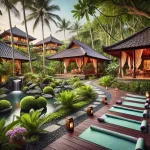
Yoga and meditation retreats. The classic choice, and the easiest to find. Ubud in Bali has become one of the world’s best-known retreat towns, with daily classes, healthy food, and jungle quiet a short walk from the centre. Our guide to planning a wellness retreat in Bali covers how to choose one, and the Bali holistic healing centres piece looks at what the island offers beyond yoga. When choosing, look for small groups, teachers you can check by name, and a schedule with real free time — a retreat that fills every hour is just a busy week in a prettier place.
Silent and meditation retreats. A few days of quiet can be the most restful thing a noisy life offers, but go in with open eyes: silence is harder than it sounds, and a first retreat of two or three days is a kinder start than a ten-day one.
What to check before booking. Ask what is included (meals, classes, transfers), what a typical day looks like hour by hour, how many guests there are at once, and what happens if you need to skip something. A good retreat will answer all four happily.
Hot Springs: The Oldest Wellness Trip There Is
Soaking in hot mineral water is one of the oldest forms of travel for health, and it is still one of the simplest. Japan has turned it into an art form: the country has thousands of onsen (hot spring baths), and whole towns exist around them.
Kusatsu Onsen in Gunma Prefecture is one of Japan’s most famous hot spring towns — its steaming, sulphur-rich waters have drawn visitors for centuries, and the town centre is built around the Yubatake, a wooden structure where the hot water is cooled as it flows down. It is a good first onsen town because everything is walkable and the public baths are easy to try.
Onsen etiquette, in short. Wash thoroughly before you get in, enter the water without swimwear, keep your towel out of the bath, and be quiet — the bath is a place for calm, not conversation. Many onsen still restrict visible tattoos, though a growing number now allow them or offer private baths; check before you go if this affects you.
Hot springs elsewhere. You do not have to go to Japan. Iceland’s geothermal pools, Hungary’s thermal baths in Budapest, and the hot springs of Taiwan and New Zealand all offer the same simple pleasure: warm water, cold air, and an hour with nothing to do.
Slow Travel: The Wellness Trip That Costs Nothing Extra
Slow travel is wellness travel without the label. Stay in one place for a week instead of three places in a week. Cook a meal. Learn the walk to the bakery. Sit in the same café twice. The rest comes from the repetition, not from any activity.
It works best in places built for lingering: a small town with a market, a coastal village, a city neighborhood you can explore on foot. Rent a place with a kitchen and a comfortable chair, and plan one thing a day at most. The research is on your side here in the simplest sense — people remember slow trips more fondly than packed ones, because they actually lived in the place instead of passing through it.
Food, Sleep, and the Small Stuff That Decides the Trip
Sleep is the trip. A wellness trip that starts with a red-eye and ends with a 5 a.m. alarm has missed the point. Fly at a civilized hour, give yourself a full night on arrival before doing anything, and treat the bed as the most important thing you booked.
Eat like a local, not like a patient. The healthiest food on a wellness trip is usually the local food, eaten slowly: market vegetables, fresh fish, simple cooking. You do not need a detox menu; you need regular meals, water, and time to enjoy them.
Move gently every day. A morning walk, a swim, a stretch — not a workout plan, just movement that fits the day. If the place you stay makes gentle movement easy (a beach path, a garden, a pool), half your wellness plan is already done.
Planning Your First Wellness Trip
Pick one intention. Rest, reset, or reconnect — one is enough. A trip trying to do all three usually does none of them.
Choose the place for its quiet, not its fame. A famous retreat town at its busiest is not restful. Shoulder season — the weeks just before or after the peak — gives you the same place with space to breathe and lower prices.
Book direct and ask questions. Small retreats and guesthouses answer their own email. Ask about noise, about the walk to the nearest food, about whether the room is actually quiet. The answer tells you as much as any review.
Leave one day entirely empty. Not “free time between activities” — a whole day with nothing on it. It is the day most people remember best.
Frequently Asked Questions
Is wellness travel only for people who like yoga?
No. Yoga is one door, not the house. Hot springs, slow travel, walking holidays, and a quiet week by the sea are all wellness travel, and none of them requires a mat.
How much does a wellness trip cost?
It varies enormously. A week of slow travel in a small town can cost less than a normal holiday, because you are not paying for tickets, tours, and transport every day. A guided retreat costs more, but includes meals, classes, and structure — compare the full cost, not just the room rate.
Can I do wellness travel with children?
Yes, with a different shape. A hot spring town, a beach week, or a farm stay can be restful for the whole family if the days are slow and the place is safe for children to roam. A silent retreat cannot — and should not — be a family trip.
Do I need travel insurance for a wellness trip?
The same as for any trip: yes, especially if you are booking a retreat with a non-refundable deposit or traveling somewhere with expensive medical care. It is the least relaxing thing to arrange, which is exactly why it is worth arranging early.
Sources & fact-check: retreat and onsen guidance reflects widely published travel practice; Kusatsu Onsen is a long-established hot spring town in Gunma Prefecture, Japan, centred on the Yubatake; onsen etiquette (wash before entering, no swimwear, towel out of the water, tattoo restrictions at many baths) follows standard Japanese bathing custom. Fact-checked 18 November 2026. Customs and entry rules vary by bath — confirm current rules with the bath or your hotel before visiting.